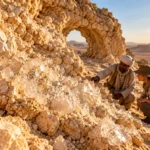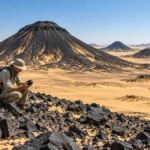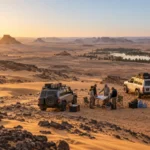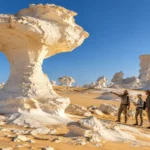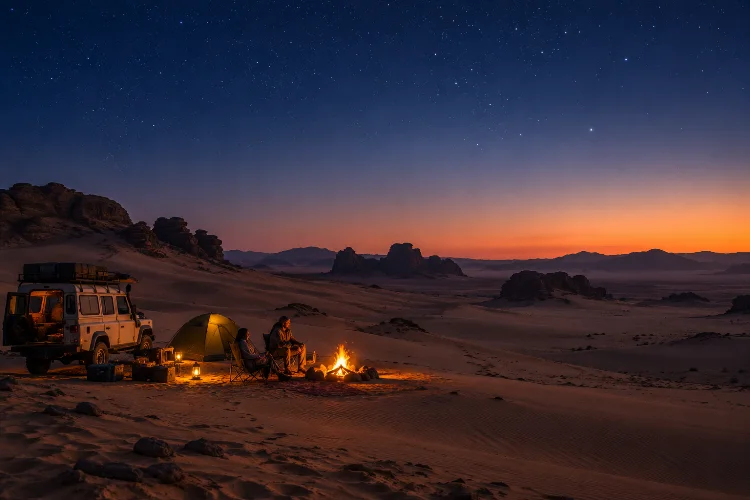
Camping deep in Egypt’s desert is completely different from spending a night at an organized campground.
Once the paved road disappears, there may be no electricity, reliable phone signal, nearby shop, bathroom, medical facility, or easy way to replace something you forgot.
That isolation is also exactly why the experience can be extraordinary. Sunset over empty dunes, dinner beside a small campfire, and a night sky with almost no artificial light can become highlights of an entire Egypt trip.
Knowing how to prepare for remote desert camping in Egypt’s Sahara is therefore mainly about reducing avoidable risks before leaving civilization.
In areas such as Bahariya, Farafra, the Black Desert, and White Desert, current travel guidance requires advance permits and an official guide for tourists entering several Western Desert zones. Mobile coverage and medical facilities can also be limited.
The right approach is not extreme survivalism. It is good logistics, realistic expectations, reliable local support, and enough backup capacity when plans change.
Choose the Desert Area Before Choosing Your Gear
“Camping in the Sahara” sounds like one activity, but Egypt contains very different desert environments.
The Western Desert around Bahariya and Farafra is one of the most accessible options for multi-day camping. The area gives travellers access to the Black Desert, White Desert, Crystal Mountain, dunes, oasis landscapes, and long 4×4 routes.
Egypt’s official tourism portal describes White Desert expeditions ranging from one to ten nights depending on whether the trip includes hiking, camping, camel travel, or 4×4 exploration.
Start by deciding how remote you actually want to go.
A one-night White Desert camp is very different from a five-day expedition linking several oases. Longer trips require more fuel, water, food, spare equipment, vehicle redundancy, and contingency time.
Do not create a route simply because several places look close on a digital map. Desert terrain, checkpoints, restricted areas, track conditions, and permit requirements can completely change practical travel times.
Arrange Permits and a Licensed Guide First
Remote desert camping in Egypt is not something to improvise after renting a vehicle.
Current official tourism guidance recommends checking regulations with an authorized travel agency or licensed tour guide before heading into desert areas.
For Bahariya-based trips, authorities specifically recommend experienced guides who know the terrain and suitable 4×4 vehicles.
Current UK travel advice also states that tourists entering Bahariya Oasis, Farafra, the White Desert, and Black Desert must arrange permits in advance and use an official guide. It additionally warns that some Western Desert areas and roads have stricter travel restrictions.
Your operator should be able to explain who organizes permits, where you are legally allowed to camp, and what happens if a planned route becomes unavailable.
Ask these questions before paying a deposit.
A professional guide should also know where fuel and water can be replenished, which tracks are currently practical, and how to respond to mechanical problems.
Treat the 4×4 as Part of Your Safety Equipment
In remote desert travel, the vehicle is not merely transportation.
It carries drinking water, food, shelter, cooking equipment, fuel, recovery gear, luggage, communication equipment, and potentially your fastest route to medical help.
For trips lasting more than two or three nights, Egypt’s official tourism guidance recommends an additional support vehicle carrying supplies and equipment.
That may sound excessive until one vehicle develops a serious mechanical problem hours away from a paved road.
Before departure, confirm that the expedition carries proper spare tyres, a jack suitable for desert conditions, tyre repair equipment, recovery straps, tools, and enough fuel for the planned route plus a reserve.
Vehicle maintanance matters more than cosmetic appearance. A shiny SUV with poor tyres is a worse choice than an older 4×4 that is professionally maintained and driven by someone who understands sand.
Keep essential water and personal medication distributed sensibly rather than placing absolutely everything in one vehicle.
Plan Water, Food, and Fuel With a Reserve
Water is the supply you cannot afford to underestimate.
Your operator should calculate enough for drinking, cooking, basic hygiene, and emergencies, with additional capacity in case the group is delayed. Hot weather, walking, illness, or unexpected mechanical problems can all increase consumption.
Do not depend on finding shops once you leave an oasis.
For meals, simple food is usually best. Rice, bread, vegetables, fruit, grilled dishes, soups, tea, and other ingredients that travel well can produce excellent camp meals without complicated refrigeration.
Ask how drinking water is stored and whether sealed bottled water or treated supplies are provided.
Fuel planning is equally important on longer expeditions. Your guide should know the distance between reliable filling points and carry additional fuel when the route requires it.
The goal is redundancy. Remote camping becomes stressful when every resource has been calculated to last exactly until the expected return time.
Prepare for Hot Days and Surprisingly Cool Nights
People often prepare for Egyptian desert heat and forget about the night.
Temperatures can fall sharply after sunset, especially during the cooler part of the year. Wind can make the difference feel even greater once you stop moving.
Use a layered clothing system rather than packing only heavy or lightweight clothing.
A breathable base layer works during the day, while a warm fleece or jacket becomes useful after dark. A light wind-resistant outer layer can make sitting outside after sunset much more comfortable.
Ask your operator exactly what sleeping equipment is included.
A statement such as “camping equipment provided” may mean a proper tent, sleeping mattress, pillow, and warm blankets – or something much more basic.
If sleeping comfort matters to you, confirm the mattress thickness and whether tents close properly against wind and sand.
A headlamp is particulary useful. Unlike a phone flashlight, it keeps both hands free when adjusting a tent, finding equipment, or walking around camp after dark.
Keep Your Personal Packing Simple but Useful
Remote camping encourages people to overpack.
Most of the important communal equipment should already be carried by the operator, so concentrate on personal items that improve comfort and reliability.
Bring sun protection, sunglasses, a hat, sturdy closed footwear, warm layers, a headlamp, personal medication, toiletries, a reusable water bottle, and a power bank.
Keep electronics inside dust-resistant bags. Fine desert sand gets into camera lenses, charging ports, and zippers remarkably easily.
A scarf or lightweight buff is useful when the wind starts blowing sand.
For photography, charge everything before leaving the oasis. Electricity may be completely unavailable at camp.
Avoid carrying large hard-shell luggage into the desert when a smaller soft-sided bag will work. Space inside 4×4 vehicles becomes valuable once tents, water, food, and recovery equipment are loaded.
Keep one small bag with essentials accessible rather than buried beneath the expedition gear.
Prepare for Limited Phone Coverage
Remote desert travel is one of the rare situations where assuming you will have mobile service is a bad plan.
Current travel guidance specifically warns of limited phone reception and poor medical facilities in parts of Egypt’s Western Desert.
Ask the operator how guides communicate when normal mobile networks disappear.
The answer will depend on the route and company, but there should be a realistic communication and emergency plan rather than reliance on everyone’s smartphones.
Download maps and important travel documents for offline access before leaving town.
Tell someone outside the expedition where you are going, which operator you are travelling with, and approximately when you expect to return.
Travel insurance should also cover the activities included in your itinerary. If you are doing remote off-road travel rather than ordinary sightseeing, read the policy carefully instead of assuming every desert activity is automatically covered.
Think About Medical Problems Before They Happen
A small health issue feels very different when the nearest clinic is several hours away.
Bring enough prescription medication for the trip plus a reasonable reserve. Keep anything temperature-sensitive stored according to its instructions.
Carry a basic personal first-aid kit even when the guide has a larger one.
Minor cuts, blisters, headaches, stomach problems, sun exposure, and dehydration can make an otherwise enjoyable trip miserable.
More importantly, tell the operator before departure if anyone in the group has mobility limitations, serious allergies, or other needs that could change emergency planning.
You do not need to become paranoid about every possibility.
You simply want an answer to one question: if someone cannot continue the trip tomorrow morning, how will they get back to an oasis or medical facility?
That plan should exist before you enter the remote enviroment.
Camp Only Where Camping Is Permitted
The desert may look endless, but that does not mean every empty space is an acceptable campsite.
Egypt’s environmental authority maintains specific requirements for camping activities in protected areas, while the official White Desert management framework separates areas by protection level.
In some recreational zones, vehicle movement is limited to designated tracks and camping is restricted to approved locations.
Follow your guide’s campsite choice rather than selecting a dramatic location purely for photographs.
Do not drive unnecessarily across untouched ground, carve rock, collect fossils or crystals, or damage chalk formations.
Pack out rubbish, including small items that are easy to lose in sand.
Experience Egypt also notes that camping in protected areas can require special permits and that licensed guides are necessary in many locations.
Remote camping works best when the site looks almost unchanged after everyone leaves.
Expect Basic Comfort, Not Total Hardship
Camping remotely does not necessarily mean being uncomfortable.
Many operators provide mattresses, blankets, tents, cooked meals, tea, tables, and simple seating. The exact setup varies enormously, so check before booking.
Some people prefer sleeping beneath the open sky when conditions allow. Others sleep much better inside a closed tent.
Neither choice makes the experience more “authentic.”
A good expedition lets you enjoy the isolation without spending the entire night cold, hungry, or wondering where the drinking water went.
For longer trips, consider mixing camping nights with simple oasis accomodation. A shower and proper bed after two nights in the desert can make the next section of the journey much more enjoyable.
Learning how to prepare for remote desert camping in Egypt’s Sahara is mostly about planning for the things city travel normally provides automatically.
Permits, a licensed guide, reliable 4×4 transport, spare vehicle capacity, water, fuel, sleeping equipment, communication, and emergency procedures all matter before you reach the first campsite.
Keep your personal packing simple, but prepare for both heat and cool nights. Confirm exactly what your operator supplies and never assume phone reception or nearby medical help will be available.
Most importantly, respect protected landscapes and current access rules. Before departure, recheck permits and travel advice with your licensed operator and relevant authorities.
With those basics handled properly, you can stop worrying about logistics and enjoy what remote desert camping is really about: silence, enormous landscapes, and a night sky you rarely see anywhere else.