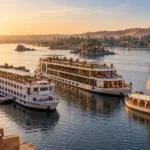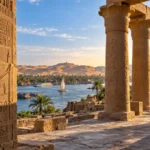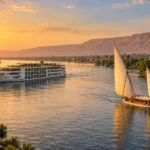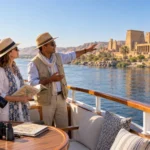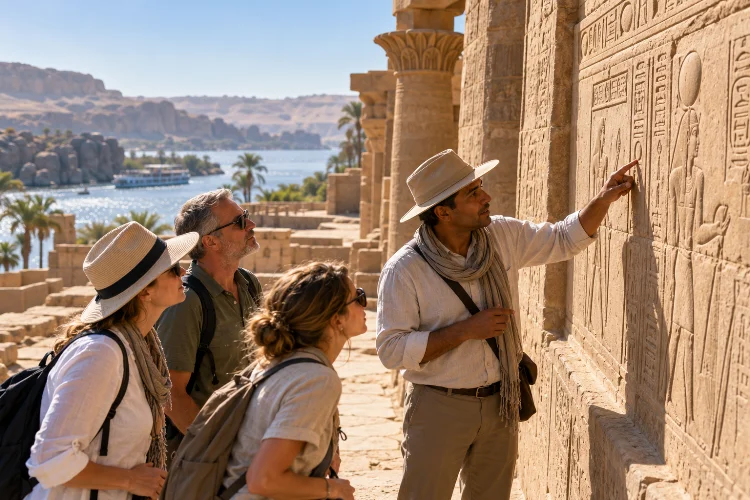
A standard Nile cruise can show you an impressive amount of ancient Egypt in only a few days.
You might visit Karnak in the morning, sail toward Edfu in the afternoon, explore Kom Ombo the next day, and finish among the island temples of Aswan. The problem is that archaeology rarely rewards rushing.
If tombs, temples, inscriptions, and ancient landscapes are a major reason for your trip, learning how to plan a Nile cruise with extended archaeological excursions can completely change the experience.
Instead of relying only on the cruise’s standard sightseeing package, you can add extra hotel nights, private guides, specialist day trips, and longer visits at places that deserve more attention.
Most conventional Luxor–Aswan cruises last around four to five days and include major stops such as the Valley of the Kings, Karnak, Luxor Temple, Edfu, Kom Ombo, and Philae.
That’s an excellent foundation. The trick is building around it rather than trying to squeeze everything into it.
Start by Reading the Excursion Schedule Before Choosing the Ship
When archaeology is the priority, don’t begin your search with cabin photos or swimming pools.
Open the detailed itenerary first.
A cruise advertising “Luxor sightseeing” might include Karnak, Luxor Temple, and the West Bank in one very busy day. Another operator might split those visits across two days, providing significantly more time at each archaeological site.
Most classic Nile cruises provide daily historical excursions between Luxor and Aswan, usually over four or five days. That efficiency is useful, but it can also mean relatively short monument visits.
Ask operators how long you will actually spend ashore. “Includes Karnak” tells you much less than “approximately two hours at Karnak with an Egyptologist.”
Also check group size. Twenty minutes waiting for a large group to reassemble can matter when your total site visit lasts only 90 minutes.
Add Extra Nights in Luxor Before Sailing
Luxor is the place where archaeological travelers benefit most from extending the standard schedule.
Ancient Thebes includes Karnak and Luxor temples on the East Bank as well as an enormous archaeological zone on the West Bank.
UNESCO’s listed property includes the Valley of the Kings, Valley of the Queens, temples, royal monuments, and a landscape covering thousands of hectares.
Trying to understand all of that during one cruise excursion is nearly impossible.
Arrive in Luxor two or three nights before embarkation. Use one day for Karnak and Luxor Temple, then reserve another for a slower West Bank visit.
With extra time, you can move beyond the usual Valley of the Kings–Hatshepsut–Colossi of Memnon circuit. Depending on your interests and current access, you might investigate Medinet Habu, Deir el-Medina, additional tombs, or the Valley of the Queens.
This also gives you a useful buffer. If heat, crowds, or travel fatigue make one day less productive, you haven’t lost your only opportunity to explore Thebes.
Use Dendera and Abydos as a Major Extension
One of the best archaeological additions from Luxor is a day trip north toward Dendera and Abydos.
Dendera’s Temple of Hathor is among Egypt’s best-preserved temple complexes. The surviving structure is primarily Ptolemaic, although evidence indicates that the sacred site has much earlier origins.
Its ceiling is particularly famous for astronomical imagery, while enormous Hathor-headed columns dominate the main hall.
Abydos offers a very different experience.
The Temple of Seti I contains seven sanctuaries and exceptionally fine relief work. Abydos was also one of ancient Egypt’s major sacred centers associated with Osiris and became an important pilgrimage destination.
Egypt’s official travel material suggests Dendera as an excursion from Luxor and notes that many travelers continue toward Abydos.
Doing both in one day creates a long excursion, so don’t automatically add it to the middle of an already demanding cruise schedule. It works better before embarkation or after disembarking in Luxor.
Protect Enough Time for the Classic Cruise Stops
Extended excursions should deepen your itinerary, not make the standard stops feel rushed.
Edfu, Kom Ombo, Esna, and Philae represent very different phases of Egyptian religious architecture. If your cruise includes them, resist the temptation to mentally classify them as “another temple.”
At Esna, for example, the surviving Temple of Khnum preserves an impressive Roman-period pronaos with astronomical decoration and inscriptions naming Roman emperors.
Edfu is especially useful for understanding the traditional progression through an Egyptian temple because so much of its structure survives.
Kom Ombo’s unusual dual sanctuary helps reveal how one temple could serve two divine cults, while Philae demonstrates the remarkable continuation of Egyptian religious traditions into the Graeco-Roman world.
Build some mental breathing room into your trip. Visiting three major temples in one day might look efficient on paper, but after several hours of reliefs, hieroglyphs, columns, and heat, details begin to merge together.
A deeper journey sometimes means seeing slightly fewer things.
Extend the Aswan End of the Cruise
Just as Luxor deserves extra time, Aswan should not be treated merely as the cruise terminal.
The surrounding archaeological landscape is part of UNESCO’s Nubian Monuments from Abu Simbel to Philae, which includes Philae, Elephantine, ancient quarries, Old and Middle Kingdom tombs, Kalabsha, Abu Simbel, and several other sites.
Plan at least two additional nights if your schedule allows.
One day can be devoted to Philae and archaeological sites around Aswan itself. Another can be reserved for Abu Simbel.
This approach is much more comfortable than finishing a cruise, taking an extremely early excursion south, and immediately catching another flight or train.
Aswan is also worth experiencing at a slower pace. The city’s location near Egypt’s ancient southern frontier provides important context for understanding relations between Egypt and Nubia, military campaigns, trade, stone quarrying, and cultural exchange.
Treat Abu Simbel as More Than an Optional Add-On
Abu Simbel often appears on cruise brochures under “optional excursions.”
For travelers interested in archaeology, it deserves more consideration than that wording suggests.
The Great Temple was carved into rock for Ramesses II, while the neighboring temple honored Queen Nefertari and Hathor.
The monuments were later moved during UNESCO’s international campaign to save Nubian heritage threatened by rising waters following the construction of the Aswan High Dam.
The wider UNESCO rescue campaign ran between 1960 and 1980 and involved multiple monuments across Nubia.
That gives Abu Simbel two archaeological stories: the ancient monument itself and the extraordinary modern conservation project that preserved it.
If you dislike rushed group visits, compare road tours, private departures, and available flight options before booking. The cheapest excursion isn’t necessarily the best choice if it gives you very limited time at the site.
Invest in a Good Egyptologist Guide
Extended time at archaeological sites becomes much more valuable when someone can explain what you’re actually seeing.
Temple walls contain layers of political messaging, mythology, ritual, restoration, deliberate erasure, reused architecture, and later modifications. Without interpretation, many reliefs can start looking deceptively similar.
Ask whether your cruise uses one Egyptologist throughout the journey or different local guides at each destination.
For extra days, consider booking a private specialist, especially if you have particular interests such as New Kingdom tomb painting, Ptolemaic religion, royal chronology, hieroglyphs, conservation, or Nubian archaeology.
A smaller private excursion also makes it easier to ask questions and adjust the pace.
Instead of hearing a five-minute summary before being told when to return to the bus, you can spend time comparing relief styles, understanding temple orientation, or discussing why later rulers inserted themselves into older sacred landscapes.
For a history-focused trip, that additional depth is often a better investment than a cabin upgrade.
Build Rest Time Into the Archaeological Schedule
Enthusiasm can create terrible itineraries.
It is easy to plan Karnak, Luxor Temple, four West Bank sites, Dendera, Abydos, Edfu, Kom Ombo, Philae, Elephantine, and Abu Simbel without considering what several consecutive days of early mornings actually feel like.
Upper Egypt can be physically demanding, particularly in hotter months.
Experience Egypt recommends October through May as a particularly comfortable period for Nile cruising, with warmer days and cooler river evenings. Even then, long walks through exposed archaeological sites require water, sun protection, and sensible pacing.
Avoid scheduling every free afternoon.
One of the benefits of travelling by river is having time to sit on deck and actually watch the Nile. Archaeological depth does not require turning the vacation into an academic endurance test.
A free afternoon after a major excursion can make the following day’s site visit far more enjoyable.
Ask What Is Included Before Paying
Extended archaeology can quietly increase the overall cost of a cruise.
Before confirming, find out whether the price includes monument entrance fees, transportation, guiding, additional tomb tickets, transfers, and optional excursions.
Some special areas at temples may require seperate tickets. For example, the official Dendera listing currently distinguishes general admission from access to areas such as the panorama and crypts
Check current official prices shortly before travelling because archaeological ticket policies can change.
Also confirm logistics for days outside the regular cruise program. If you stay in Luxor before sailing, who handles the transfer to the ship? If you add two nights in Aswan, does the cruise arrange your hotel transfer or does responsibility end at disembarkation?
Small practical details matter when you’re trying to coordinate early archaeological excursions.
Create a 7–10 Day Archaeology-Focused Version
A conventional four- or five-day cruise becomes significantly richer when placed inside a longer Upper Egypt itinerary.
For example, spend two or three nights in Luxor before sailing, including a full archaeological day and a Dendera/Abydos excursion. Then take the standard cruise south, giving Edfu, Kom Ombo, and other included stops your full attention.
After reaching Aswan, add another two nights.
Use that time for a slower Philae and Aswan archaeology day, followed by Abu Simbel.
The result is still relatively compact—roughly seven to ten days depending on cruise length – but feels much less rushed.
More importantly, the cruise becomes the spine of the trip rather than the entire trip.
That is usually the best formula for travellers who care more about ancient sites than onboard entertainment.
Knowing how to plan a Nile cruise with extended archaeological excursions means building extra time around the standard sailing itinerary instead of trying to force every ancient site into four or five days.
Start by adding nights in Luxor, where the enormous landscape of Ancient Thebes deserves far more than a quick excursion.
Consider Dendera and Abydos for deeper temple exploration, then enjoy the classic river stops without overloading each day. At the southern end, extend your stay in Aswan for Philae, Nubian archaeology, and Abu Simbel.
Most importantly, compare time ashore, guide quality, entrance arrangements, and group size before comparing luxury features onboard. Build the trip around the history you genuinely want to understand, and let the Nile cruise connect those experiences at a comfortable pace.