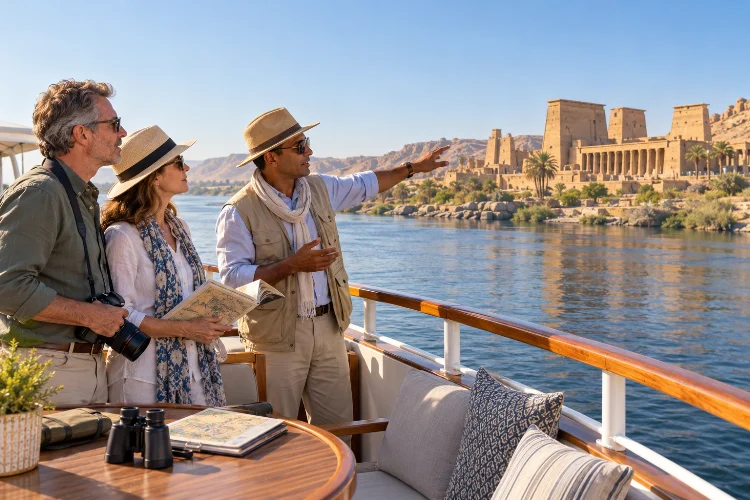
A Nile cruise can be either a relaxing floating-hotel experience with a few temple visits or one of the best archaeology-focused journeys in Egypt. The difference usually comes down to what you choose before booking.
If ancient history is your priority, the most luxurious cabin should probably not be the first thing you compare.
A better question is whether the itinerary gives you meaningful time at Karnak, the Valley of the Kings, Edfu, Kom Ombo, Philae, and other sites connected with Upper Egypt’s long history.
Knowing how to choose a Nile cruise based on archaeological interests also means looking beyond the headline route.
Guide quality, group size, optional excursions, time spent ashore, and even the type of vessel can dramatically change how deeply you experience the monuments.
Classic cruises between Luxor and Aswan commonly take around four to five days and include daily visits to major historic sites. But not every cruise approaches those sites with the same level of depth.
Start With the Archaeology, Not the Ship Rating
Five-star branding tells you relatively little about the historical quality of a cruise.
A beautiful cabin, large buffet, swimming pool, and spacious deck may make the journey comfortable, but archaeology enthusiasts should begin by reading the day-by-day excursion schedule.
Look for specific monument names rather than vague descriptions such as “Luxor sightseeing” or “visit ancient temples.”
A serious itinerary should clearly explain whether you will see Karnak, Luxor Temple, the Valley of the Kings, Hatshepsut’s mortuary temple, Edfu, Kom Ombo, and Philae.
These are not interchangeable attractions.
UNESCO’s Ancient Thebes World Heritage property includes Karnak, Luxor Temple, the Valley of the Kings, the Valley of the Queens, and the wider Theban necropolis. The area preserves some of the most important evidence for Egypt’s Middle and New Kingdom periods.
For someone fascinated by royal burial traditions, an extra hour on Luxor’s West Bank may therefore be more valuable than an upgraded suite.
Choose Between the Classic Nile Route and Lake Nasser
The first major decision is deciding which archaeological landscape interests you most.
1. Luxor to Aswan
The classic Nile cruise runs between Luxor and Aswan. Official Egyptian tourism information says most cruises on this route stop at major sites including the Valley of the Kings, Karnak Temple, Luxor Temple, Edfu, Kom Ombo, and Philae.
This route works extremely well for first-time visitors because it combines several periods of Egyptian history.
Luxor is especially strong for New Kingdom archaeology. Edfu and Kom Ombo introduce later temple traditions, while Philae provides an excellent window into Ptolemaic and Roman-period religious architecture.
The direction itself matters less than the amount of time allocated to each site. Luxor-to-Aswan and Aswan-to-Luxor cruises generally cover the same archaeological corridor.
2. Lake Nasser
If Nubian archaeology interests you more, look beyond the standard itinerary.
Lake Nasser cruises can focus on monuments south of Aswan, including temples connected with ancient Nubia and, most famously, Abu Simbel.
UNESCO’s Nubian Monuments property includes Abu Simbel, Philae, Amada, Wadi Sebua, Kalabsha, Elephantine, and other archaeological components.
Several of these temples were relocated during the international campaign launched to protect them from flooding after the construction of the Aswan High Dam.
For travellers already familiar with Luxor, a Lake Nasser route can provide a very different archeolgical perspective.
Compare a Classic Cruise Ship With a Dahabiya
The vessel itself can affect how you experience ancient sites.
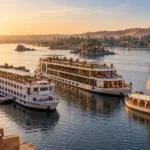
Large Nile cruise ships provide convenience. You typically unpack once, travel in air-conditioned comfort, eat onboard, and join organized excursions at predictable stops.
For first-time visitors who want the major monuments without complex logistics, this format is hard to beat.
A dahabiya, however, offers a slower and more intimate alternative.
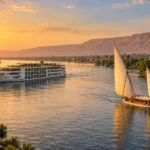
Egypt’s official tourism portal describes dahabiyas as smaller two-masted sailing vessels that travel more quietly than standard cruise ships and can dock more easily at villages, islands, and lesser-known archaeological sites.
That can be particularly appealing if you dislike large groups.
A small boat may allow a more flexible rhythm, although you should still inspect the exact itenerary. “Boutique” does not automatically mean archaeologically deeper.
Ask which minor sites are included, how long stops last, and whether excursions are privately guided or shared with larger groups after docking.
Check How Much Time You Actually Get at Each Site
A long list of monuments can look impressive while still producing a rushed experience.
Imagine two cruises that both advertise Karnak. One gives you 75 minutes with a group of 35 people; the other provides two and a half hours with a knowledgeable guide.
Technically, both “include Karnak.” The archaeological experience is completely different.
Karnak alone is enormous. UNESCO notes that the famous Hypostyle Hall covers approximately 5,000 square metres and contains 134 columns. Trying to understand the entire complex during a very short visit means constantly moving.
The same applies to Luxor’s West Bank.
The Theban necropolis covers a vast archaeological landscape containing thousands of tombs, temples, settlements, workshops, and religious structures.
Before booking, ask the operator for estimated time ashore rather than merely asking which places are included.
Also check whether sightseeing begins extremely early. Early starts can actually be useful in Egypt because they reduce heat and crowds, but repeated dawn departures may become tiring over several days.
Prioritize the Quality of the Egyptologist Guide
For archaeology-focused travel, the guide can matter more than the ship.
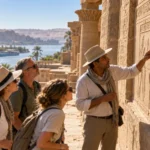
Ancient Egyptian temples are covered with inscriptions, reliefs, architectural additions, erased names, reused blocks, ritual spaces, and political symbolism. Without context, even an extraordinary temple can become a series of impressive walls.
Look for cruises that clearly state that excursions are led by qualified Egyptologists or specialist guides.
Then ask about group size.
A guide speaking to 10 people can usually answer questions and spend time explaining details. With 40 passengers moving through a crowded temple, the experience tends to become more general.
If you have specialist interests, mention them before booking.
Someone interested in Ramesside military reliefs might want more time at Medinet Habu. A traveller fascinated by religious continuity may prefer deeper interpretation at Philae. Tomb painting enthusiasts may want additional time on the West Bank.
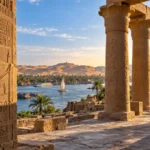
Philae is especially rich for this kind of close reading. UNESCO describes it as a major sanctuary of Isis whose religious use continued into late antiquity.
A good guide can connect those layers instead of simply reciting dates.
Look Carefully at Optional Archaeological Excursions
Some of the most important archaeological experiences may not be part of the standard cruise fare.
Abu Simbel is a classic example.
The temples lie far south of Aswan and belong to the UNESCO-listed Nubian monuments. The Great Temple was carved into rock for Ramesses II and is fronted by colossal royal statues.
Standard Luxor-Aswan cruises may offer Abu Simbel as a seperate excursion rather than part of the river itinerary.
If Abu Simbel is essential to you, check this before booking rather than assuming it is included because the cruise ends in Aswan.
The same principle applies to additional tomb tickets in Luxor, the Valley of the Queens, Medinet Habu, Dendera, or specialist sites away from the main route.
Ask what entrance fees are included and which monuments require supplements.
A cheaper cruise can become more expensive once several archaeological excursions are added.
Match the Route to Your Historical Interests
Not every archaeology enthusiast is interested in the same period.
If your main fascination is the New Kingdom, prioritize Luxor. Karnak, the royal tombs, Hatshepsut’s temple, and other West Bank monuments make Ancient Thebes exceptionally important.
UNESCO describes Thebes as one of the major centres of Egyptian civilization at its height.
If Ptolemaic temple architecture interests you, spend more attention on Edfu, Kom Ombo, and Philae.
If you are interested in Nubia, ancient borderlands, and monument relocation, consider extending south from Aswan or choosing a Lake Nasser cruise.
UNESCO notes that the Nubian heritage area contains temples spanning from the New Kingdom to the Ptolemaic and Roman periods, providing evidence for centuries of interaction between Egyptian and Nubian cultures.
This is why the “best Nile cruise” does not really exist.
The best choice depends on which historical questions you want the river journey to answer.
Build Extra Days Around the Cruise
One of the smartest strategies is avoiding the assumption that the cruise must contain everything.
Add at least one independent night in Luxor before or after sailing if archaeology is your main purpose.
That gives you space for sites the cruise may rush or skip, such as additional tombs, Medinet Habu, the Valley of the Queens, or a second visit to Karnak.
The official Egypt tourism portal specifically highlights sites such as Hatshepsut’s temple and Medinet Habu on Luxor’s West Bank.
Aswan also deserves extra time.
Beyond Philae, the wider archaeological area includes Elephantine Island, ancient granite quarries, and monuments connected with Nubian history. UNESCO’s World Heritage listing includes several of these areas within the Nubian Monuments property.
This approach reduces pressure.
You can enjoy the river journey for its scenery and atmosphere while using your hotel days for slower, more particulary focused archaeological visits.
Learning how to choose a Nile cruise based on archaeological interests starts with ignoring the marketing photos for a moment and studying the itinerary.
Look at which sites are included, how much time you get ashore, the size of the excursion groups, the quality of the Egyptologist guide, and which important visits cost extra.
Choose the classic Luxor-Aswan route for a broad introduction to Upper Egyptian archaeology, consider a dahabiya for a slower and more flexible experience, or explore Lake Nasser if Nubian monuments are a priority.
Most importantly, do not judge a cruise only by how many temples appear in the brochure. A smaller number of well-paced, well-guided visits can be far more rewarding. Compare the archaeological content first, then choose the ship that delivers it comfortably.